Dr.Abha Dubey
Consultant Heamatologist
& Hemato Oncologist

Welcome to Neurology & Haematology Super Speciality Clinic
Premier Haematology Care – Your Partner in Blood Health
At our state-of-the-art haematology practice in Ahmedabad, we provide expert haematology care for both benign haematological conditions and malignant blood cancers. Led by Dr Abha Dubey, an experienced haematologist in Ahmedabad, we specialize in diagnosis, treatment, and management of conditions such as anemia, immune thrombocytopenia (ITP), thalassemia, sickle cell anemia, aplastic anemia, and ṣadvanced blood cancer treatments including acute leukemias, lymphoma, and multiple myeloma.
We focus on cutting-edge blood cancer treatments, personalized treatment plans, and holistic cancer support, making us a trusted choice for patients seeking the best haematologist in Ahmedabad.
Comprehensive Care for Benign Haematological Conditions
We treat all forms of anemia, including iron-deficiency anemia, vitamin B12 deficiency, and hemolytic anemia. Our anemia treatment in Ahmedabad uses advanced diagnostics to find the root cause and restore healthy red blood cell levels.
We provide specialized immune thrombocytopenia treatment in Ahmedabad for patients with low platelet counts and unstable platelet levels, using immunosuppressive therapy, advanced medications, and monitoring.
Our thalassemia care includes blood transfusions, iron chelation therapy, and genetic counseling to help patients manage the condition effectively.
We provide sickle cell anemia treatment focused on reducing complications through pain management, hydration therapy, and disease-modifying drugs.
We offer aplastic anemia treatment with immunosuppressive therapy, bone marrow stimulation, and guidance for bone marrow transplants when necessary.
Our clinic offers accurate diagnosis for blood cancer and advanced treatment for blood cancer in Ahmedabad using evidence-based therapy and the latest medical advancements.
As a top-rated cancer doctor for acute leukemia in Ahmedabad, Dr Abha Dubey treats acute lymphoblastic leukemia (ALL) and acute myeloid leukemia (AML) with chemotherapy, targeted therapy, and guidance for stem cell transplantation.
We provide expert lymphoma treatment in Ahmedabad, including Hodgkin lymphoma treatment and non-Hodgkin lymphoma care, with chemotherapy, immunotherapy, and radiation therapy. '
Our multiple myeloma treatment includes monoclonal antibodies, proteasome inhibitors, stem cell transplants, and other cutting-edge therapies.
Your Journey to Better Blood Health Starts Here If you are looking for the best haematologist in Ahmedabad for blood disorder treatment or advanced blood cancer care, book your consultation with Dr Abha Dubey today. Let us help you achieve better health, effective treatment, and peace of mind.
Anaemia (Pandurog) or low hemoglobin is a widely prevalent and a very under-tested cause for easy fatigability. Although nutritional deficiency is the causative factor in a large number of cases, there are other very different causes of low hemoglobin. Thalassemia and sickle cell anemia are some of the genetic cases of anemia. Working out the cause of low hemoglobin can not only lead to proper diagnosis and treatment, but can avoid blood transfusion in a substantial amount of patients. Moreover, in some cases, it can also help detect certain cancers at a very early stage. Hence, an effort should always be made to find the cause of low hemoglobin and consultation with a hematologist is very important in such cases.
Polycythemia refers to the increase in the hemoglobin level (alone or in combination with increase in white cell count and platelet count). It may be primary (genetic defect leading to overproduction of blood cells) or secondary(conditions like smoking or alcohol which create low oxygen in the body and hence lead to overproduction of blood cells by the bone marrow in the absence of any genetic defect). Left untreated, the condition increases the viscosity of the blood and may cause stroke, heart attack etc. The treatment of primary polycythemia consists of phlebotomy or blood letting as well as medications to lower the cell count. The classification of the disease into primary and secondary as well as the treatment is undertaken under the care of a hematologist.
Spontaneous bleeding or excess bleeding in proportion to the intensity of trauma is, more often than not, due to clotting abnormalities of the blood. Hemophilia is a well known example of a spontaneous bleeding condition. However, there a variety of defects in the blood which may cause excess bleeding (factor deficiency, platelet defects etc)and consultation with a hematologist is of paramount importance to find the cause and for treatment of such diseases.
Thrombosis or excess clotting of the blood may be due to defects of the clotting pathway of the blood which may cause the blood to become thicker or more viscous than usual, thereby leading to clots at different blood vessels in the body. Particularly in young patients, and sometimes in old patients as well, an effort should be taken to find out a cause for the thrombotic episode. Finding an abnormality not only helps in deciding the mode and duration of therapy, but may also uncover familial tendencies to develop such episodes and thereby, help in prevention of thrombosis and counseling of the affected family members. It is fruitful to see a hematologist in such conditions.
Thrombocytosis or increase in platelet count can occur either due to overproduction from the bone marrow because of genetic defects or can be secondary to other causes (inflammation, iron deficiency etc). Particularly in the former case, it may lead to blood clotting (or even bleeding at very high platelet count). Establishing the cause and management of thrombocytosis is done by a hematologist.
Thrombocytopenia means a decrease in the platelet count. It can either be an incidental finding or the patient may have symptoms like bleeding and easy bruisability. There are various causes of low platelet count like immune thrombocytopenia, thrombotic thrombocytopenia, post viral etc. Based on the underlying cause, patient can have additional symptoms like fever, rash, seizures, kidney or liver abnormality etc. Establishing the cause and relevant treatment is carried out by a hematologist.
Leukemia, or blood cancer, is an umbrella term which encompasses both acute leukemia (acute myeloid leukemia, acute lymphoid leukemia, acute promyelocytic leukemia) and chronic leukemia (chronic myeloid leukemia, chronic lymphoid leukemia). Patients usually have symptoms of fever, fatigue, bleeding, weight loss, decreased appetite and in some cases, swelling in the neck, armpit or the groin .The early detection and correct treatment of leukemia can be curable in the majority of cases. Not only this, but the management of the different subtypes of leukemia is very different from each other. Early consultation and prompt treatment under a hematologist is vital to the management of this disease.
Lymphomas are a type of blood cancer arising from the lymph(a type of body fluid arising from the blood, hence categorised under blood cancers). The presenting symptoms are swelling of the lymph glands in the neck, armpits or the groin. In some cases, the patients may also have fever, fatigue, anemia, weight loss and decreased appetite. Lymphoma is an umbrella term which consists broadly of Hodgkin and Non Hodgkin Lymphoma. Non Hodgkin lymphoma again is divided into a lot of subtypes. Not only is the management of Hodgkin lymphoma different from Non Hodgkin, even the subtypes of Non Hodgkin lymphoma have different treatments. Majority of the lymphomas are completely curable. Hence, seeking treatment under a hemato-oncologist at the earliest suspicion of lymphoma is vital to the correct management of this disease.
Multiple myeloma is a type of cancer arising from the bone marrow. It can present either in the form of spontaneous fractures, low blood cell counts and/or with kidney disease. Multiple myeloma is a highly treatable disease and initiating treatment at the right time is not only life saving, but can also prevent the kidneys from further damage as well as reverse the damage in some cases. Although the patient may first present to an orthopaedician due to fractures or a physician/nephrologist due to kidney disease, once the diagnosis of multiple myeloma is established, the further management of the disease falls under the purview of a hemato-oncologist.
A very rare condition, amyloidosis is a disease arising from the bone marrow which can have multiple presentations based on the organ which is affected. Patients may suffer from diarrhoea, gastric upset, heart or kidney abnormalities as well as nerve related pains or tingling and numbness. Diagnosis and management is carried out by a hematologist.
Bone marrow is the space between the bones from where the blood is produced. Diseases like aplastic anemia, myelofibrosis, myelodysplastic syndrome are examples of bone marrow failure disease. All these disease cause defect in the bone marrow which leads to a decrease or absent production of blood cells. Such patients present with fatigue, pallor, fever, bleeding and are found to have decrease in all cell counts(hemoglobin, white cell count and platelets). The various causes are treated differently and require the supervision of a hematologist.

Bone Marrow Biopsy
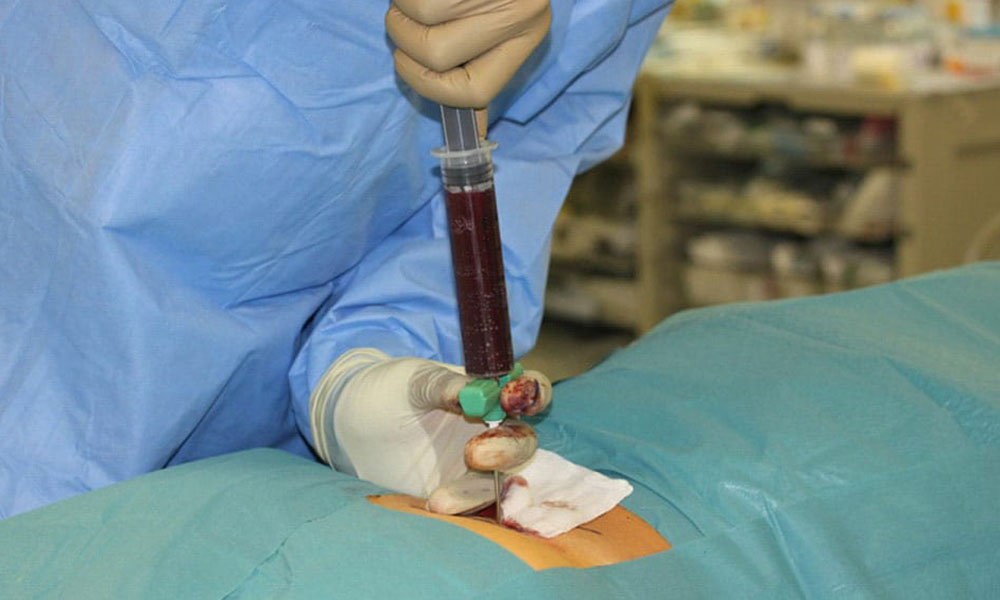
Bone Marrow Aspiration

Lumbar Puncture

Cancer Treatment Planning

Intrathecal Chemo Administration